
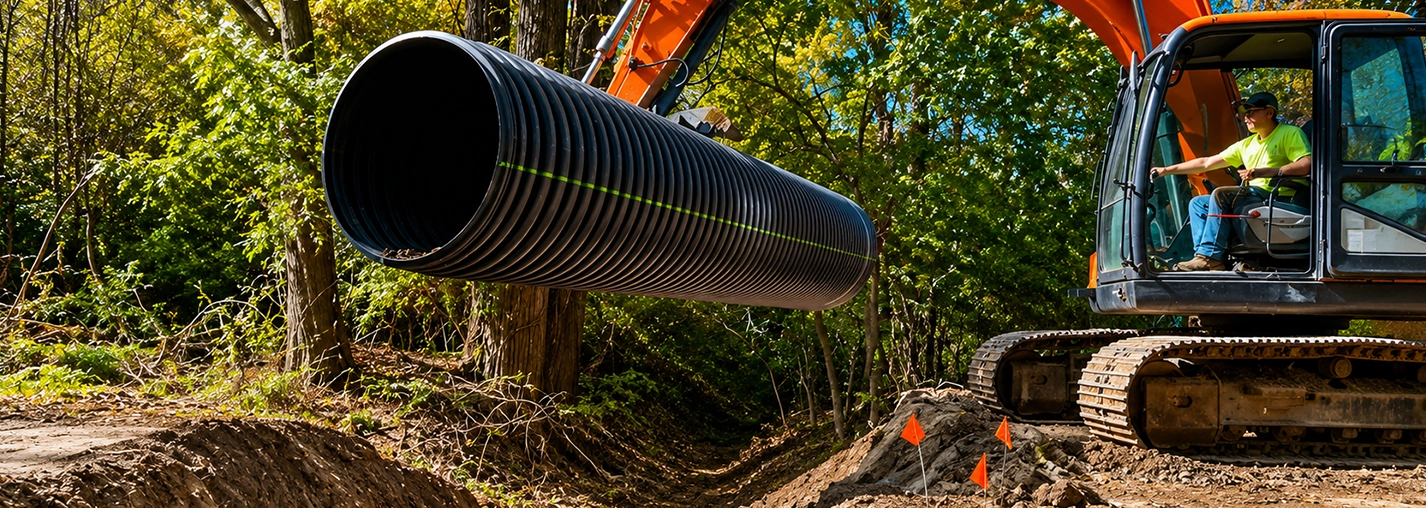
A driveway may look perfectly fine on a dry day, yet the first strong rain can reveal hidden drainage trouble. Water starts pooling around the entrance, gravel slowly washes away, and soft ground makes driving in and out difficult. As months pass, those small drainage problems can grow into expensive driveway damage that interrupts daily life. A properly placed culvert keeps water moving beneath the driveway instead of across it, helping protect both the entrance and the ground around it.
A driveway may look perfectly fine on a dry day, yet the first strong rain can reveal hidden drainage trouble. Water starts pooling around the entrance, gravel slowly washes away, and soft ground makes driving in and out difficult. As months pass, those small drainage problems can grow into expensive driveway damage that interrupts daily life. A properly placed culvert keeps water moving beneath the driveway instead of across it, helping protect both the entrance and the ground around it.
Every property carries water differently, so every culvert should match those conditions. The amount of runoff, soil type, driveway width, and surrounding land all help determine the right choice. During culvert installation, we carefully select materials and installation methods that suit your property’s drainage needs instead of forcing water through an undersized pipe.
We install several culvert styles, including:
Each culvert is placed with the correct slope so water continues moving without slowing down or creating unwanted buildup. Stable bedding supports the pipe from below, while carefully compacted fill helps reduce future settling. These installation techniques help the culvert continue carrying runoff through changing seasons while protecting the driveway above it.
A dependable culvert starts long before the pipe is placed into the ground. Our process follows a clear order because every step supports the next one and helps create reliable drainage. Careful planning today often prevents drainage trouble later.
Our installation process includes:
Throughout culvert installation, every layer is checked before moving forward. Proper compaction helps support vehicle weight, while correct grading encourages water to leave the area instead of collecting beside the driveway. Small installation details make a noticeable difference because they help reduce settling, protect the culvert, and keep water flowing where it belongs for many years.
A well-installed culvert does much more than move water beneath a driveway. It helps protect daily access, reduces future maintenance, and supports the ground every time vehicles pass over it. That value continues long after the installation is complete because dependable drainage keeps working during every rainy season. With our culvert installation, you receive careful planning, quality materials, and steady installation that focuses on long-term performance instead of temporary results.
Proper water movement helps limit erosion around the entrance while supporting the driveway from underneath. Stable grading encourages runoff to follow its natural path without washing away gravel or weakening the surrounding soil. Every completed culvert handles changing weather while helping maintain reliable property access throughout the year. That lasting performance gives you greater confidence each time heavy rain arrives because your drainage system is built to keep water moving safely beneath the driveway instead of across it.
A properly installed culvert keeps working long after the equipment leaves. Our careful installation helps reduce future maintenance, protects your driveway entrance, and gives you dependable drainage that continues serving your property season after season.
Your completed driveway entrance should feel easy to use every single day. We shape the finished surface so vehicles move comfortably across the culvert while keeping the entrance neat, stable, and ready for daily use.
A culvert performs better when it stays firmly supported underground. We carefully prepare the base and surrounding fill so the pipe stays stable, helping reduce movement beneath your driveway through years of regular traffic.
A culvert needs enough cover above the pipe to protect it from vehicle weight. The depth depends on pipe size, driveway height, soil firmness, and water channel depth. Proper cover helps keep the pipe from crushing, shifting, or rising after repeated use.
An undersized culvert can slow water down and cause it to back up near the driveway. During heavy rain, that extra pressure can push soil, gravel, and debris toward the entrance. Correct sizing helps water pass through without straining the area.
Yes, leaves, sticks, mud, and small rocks can collect near the inlet. A good inlet opening helps water enter cleanly, but regular checks still matter. Keeping both ends clear helps the culvert drain properly during sudden rain.
Yes, the angle controls how water moves through the pipe. A culvert that sits too flat can hold water and sediment. A culvert set too steep can move water too fast and wear down the outlet area.
The best pipe depends on traffic weight, water volume, soil conditions, and driveway width. Corrugated metal and heavy-duty plastic are common choices. The right pipe should support the driveway while allowing water to move without slowing inside the channel.